Baghouse Filters, Cyclones or Scrubbers: Which Dust Collection System Is Right for Your Industry
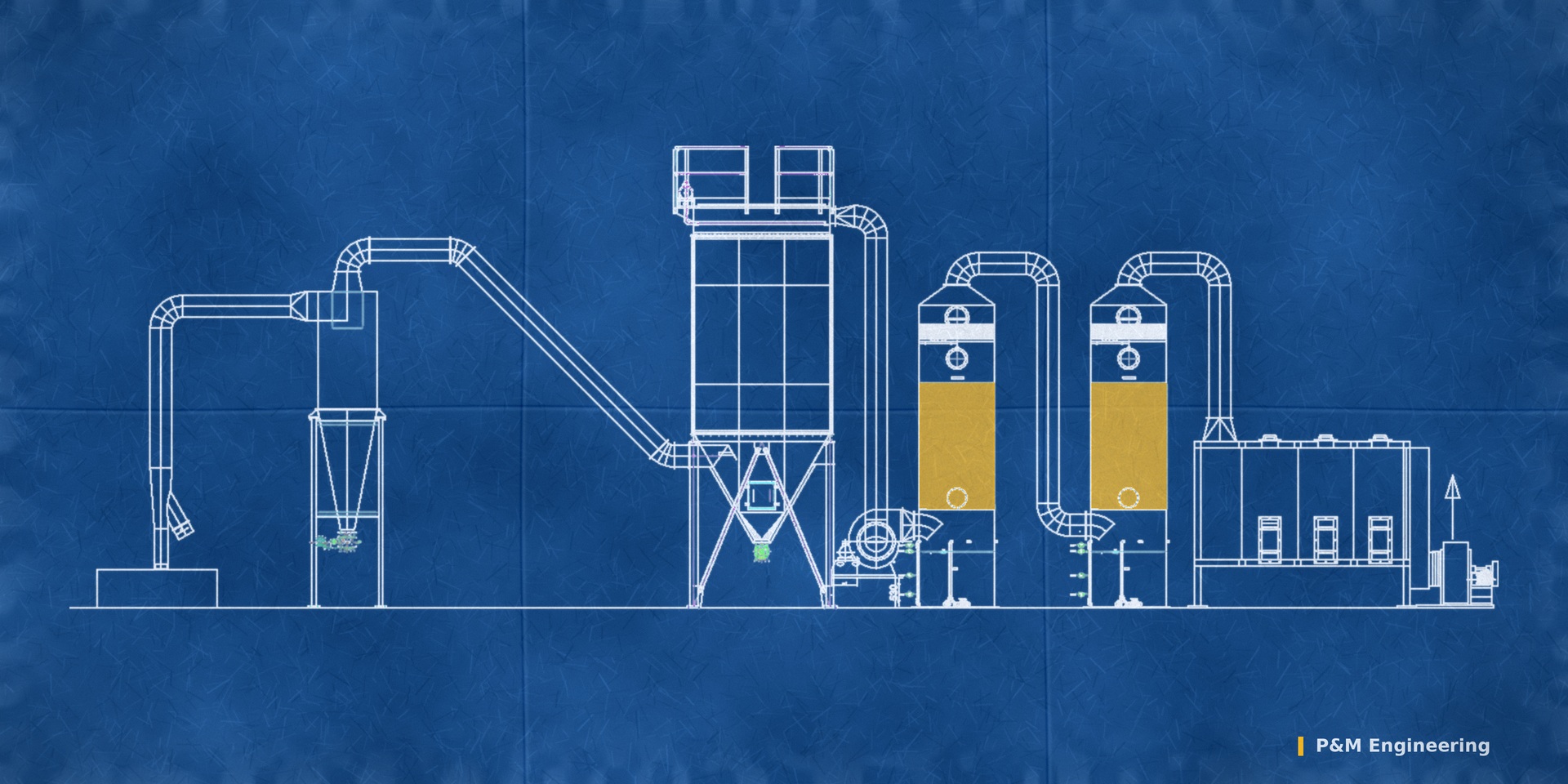
Choosing the right dust collection system is a complex issue that often concerns our customers. In general, baghouse filters provide the highest efficiency in dry applications, cyclones are the most economical solution for coarse materials, and scrubbers come into play when the gas stream is at high temperature, is wet, or is unsuitable for dry filtration. The final choice, however, always depends on three factors: particle size, gas conditions, and the process safety requirements.
Below, we explain how each system works and where each one makes the most sense, so that you can make an initial, informed assessment.
Baghouse Filters: The Most Widely Used Dust Collection Solution
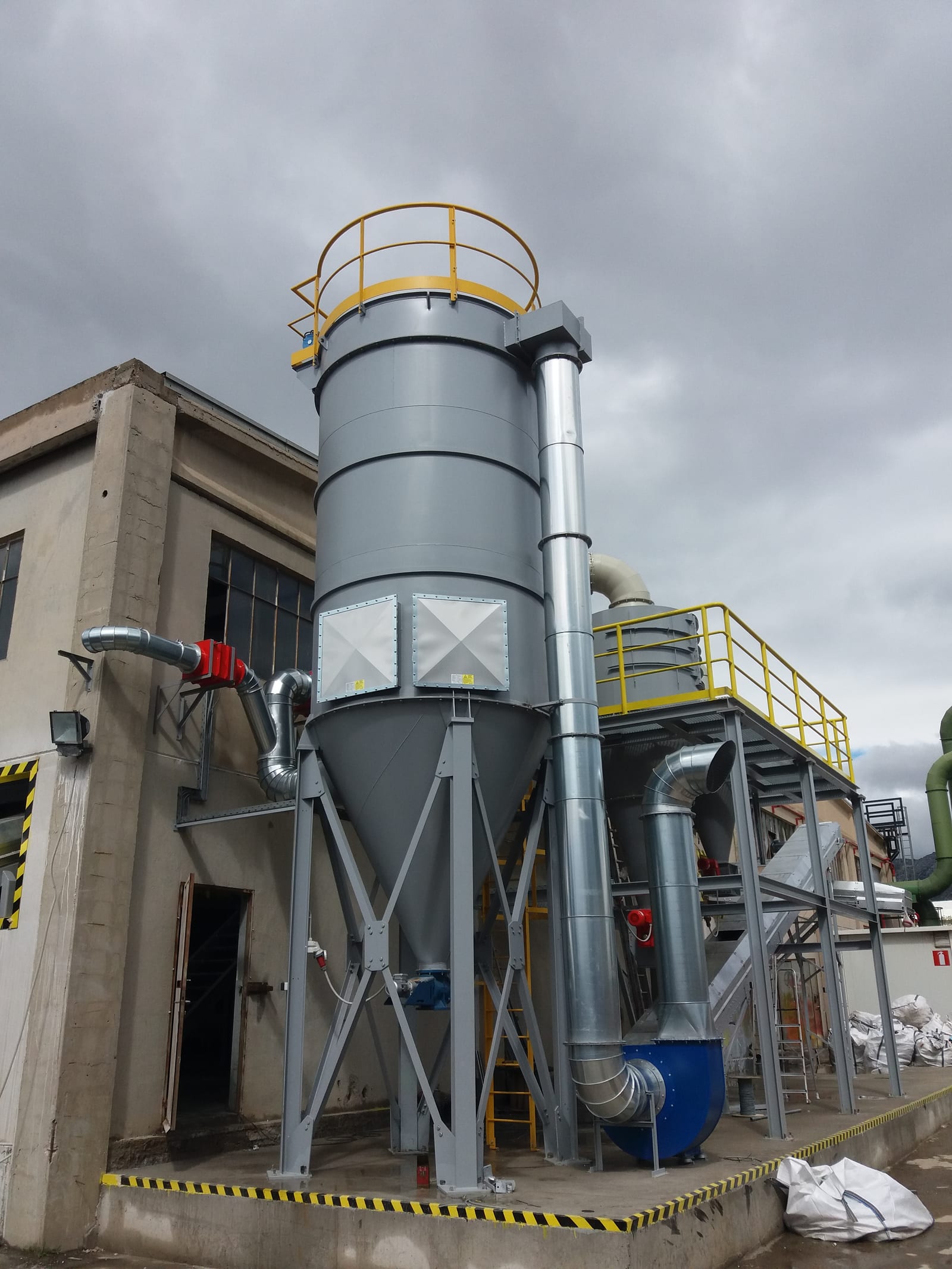
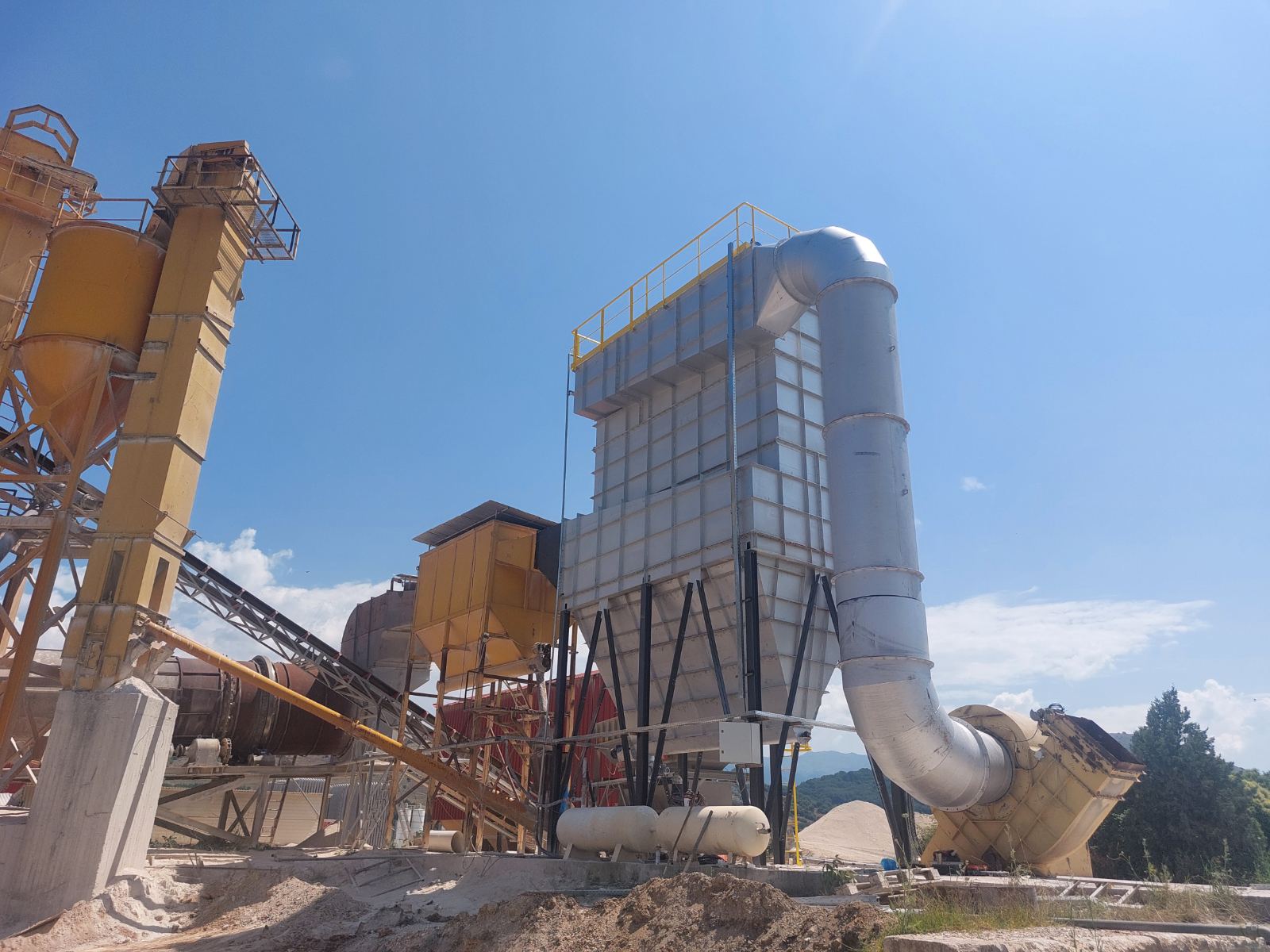
Baghouse filters force the dust-laden air stream through fabric filter bags. Dust is retained on the surface of the fabric; as a thin dust layer gradually builds up on the fabric, the collection mechanism is further enhanced. The filter bags are typically cleaned by a compressed-air pulse (pulse-jet), which dislodges the accumulated dust and directs it into the collection hopper.
This is the highest-efficiency system of the three: it captures even very fine, submicron particles, with outlet concentrations often falling below 5-10 mg/Nm³. This is why it is also the default solution in cement plants, alternative fuel processing facilities (SRF/RDF), recycling plants, and generally wherever emission limits are strict.
Their weak point is moisture. If the gas contains moisture that can condense inside the filter, the fabric can become blinded and lose its effectiveness relatively quickly. When the dust is also combustible, additional measures for protection against explosion or fire are required.
Cyclones and Multicyclones: Economical Pre-Separation
A cyclone operates by centrifugal separation: the dust-laden gas enters a conical chamber tangentially, is forced to rotate, and centrifugal force drives the heavier particles toward the wall, from where they fall into the collection hopper. The clean gas exits through the center.
It has no moving parts, so maintenance is virtually negligible, and it can easily handle high dust loads and abrasive materials. Its disadvantage is its performance on fine particles: below approximately 10-15 μm, efficiency drops noticeably, which is why it is rarely used on its own when high outlet gas cleanliness is required. Much more often, it operates as a pre-separator upstream of a baghouse filter, relieving the filter of the main dust load and extending filter bag life. Multicyclones, i.e. multiple smaller cyclones arranged in parallel, significantly improve performance on finer particles compared with a single large cyclone.
Scrubbers: The Safer Solution for Challenging Gas Streams
Scrubbers capture dust or gaseous pollutants by bringing them into contact with water. In a Venturi scrubber specifically, the gas is accelerated through a converging throat where water is injected; the high relative velocity creates extremely fine droplets that effectively trap even fine particles.
Their main advantage is that they can safely handle gas streams that would create problems for dry filtration: hot gases, which they also cool, wet or saturated streams, and - most importantly - dust with an ignition hazard, since the wet environment inherently reduces the risk of explosion. This is why they are frequently found in foundries, chemical industries and welding processes.
Their main disadvantage is that the collected dust is difficult to reuse because it is dispersed in the water, while they also have higher energy consumption in applications involving fine dust compared with baghouse filters. Their operating cost is normally higher due to water consumption, pumps, and the sludge or wastewater that must be managed.
Comparison Table
| Criterion | Baghouse Filters | Cyclones | Scrubbers (Venturi) |
|---|---|---|---|
| Collection efficiency | Very high, often >99% | Moderate, drops below ~10-15 μm | High, depends on pressure drop |
| Particle size | Submicron to coarse | Mainly coarse (>10-15 μm) | Fine particles, and gaseous pollutants |
| Hot/wet gas stream | Unsuitable without special design | Resistant, but not ideal | Ideal |
| Operating cost | Medium (consumable filter bags) | Low | Higher (water, pumping) |
| Dust explosion hazard | Requires active protection measures | Lower, depending on the dust | Inherently reduced |
| Typical application | Cement, SRF/RDF, general industry | Animal feed, wood, pre-separation | Foundries, chemical industry |
How to Make the Final Selection
In practice, the choice is rarely an “either-or” decision. Many installations combine the systems described above to achieve the best balance between performance and cost. The questions that determine the choice in practice are:
- What are the particle size and particle-size distribution?
- Is the dust combustible or explosive (ATEX requirement)?
- What are the temperature and humidity of the gas stream?
- What emission limits must be met?
- Is there sufficient space, and what is the operating-cost budget?
Frequently Asked Questions
Which dust collection system has the highest efficiency?
Baghouse filters, especially for fine particles, with efficiency often exceeding 99%.
Can I combine a cyclone and a baghouse filter in the same line?
Yes, this is very common practice. The cyclone acts as a pre-separator, reducing the dust load reaching the baghouse filter and extending filter bag service life.
Which system is safer for combustible dust?
All three can be designed for ATEX compliance, but scrubbers have an inherent advantage because of the wet environment. Baghouse filters require additional protection measures, such as explosion vent panels or isolation valves.
How much does a dust collection system cost?
It depends on the air flow rate, dust type, ATEX requirements and degree of automation. The only reliable estimate comes from an engineering study tailored to your process.