What Are ATEX Zones 21/22 and How Do They Affect the Design of a Dust Collection System?
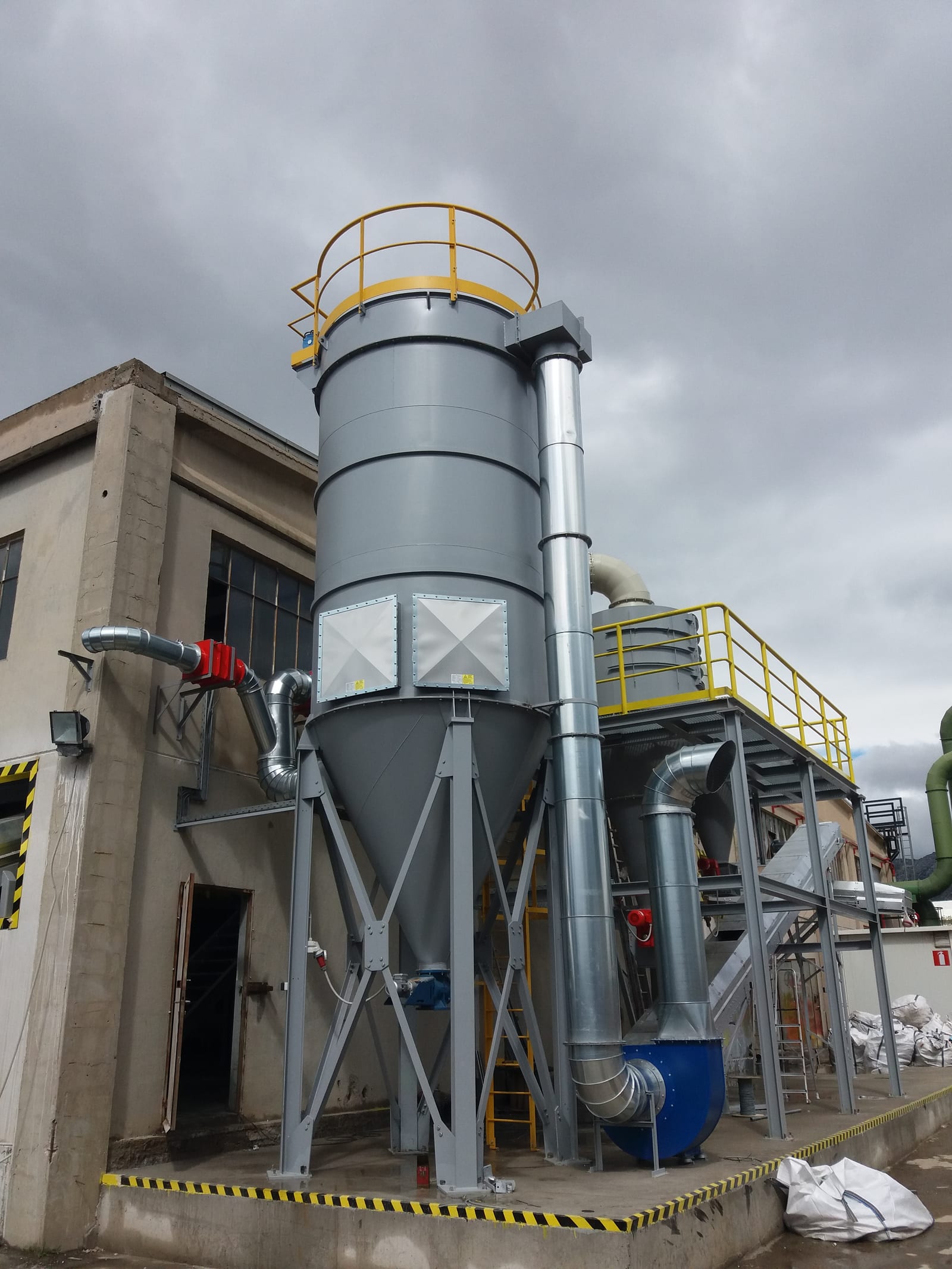
ATEX Zones 21 and 22 classify areas where an explosive dust cloud may form, depending on how frequently and for how long this occurs. This classification determines, in practice, which equipment category may be installed there and which explosion protection measures - venting, suppression, isolation - must be incorporated into the dust collection system.
The ATEX Regulatory Framework
The term ATEX, derived from the French “ATmosphères EXplosibles”, refers to two European directives that work together:
- Directive 2014/34/EU, also known as the Equipment Directive: it sets the design and manufacturing requirements for equipment and protective systems intended for potentially explosive atmospheres. It applies to equipment manufacturers.
- Directive 1999/92/EC, also known as “ATEX 137” or the Workplace Directive: it requires the employer/end user to assess the explosion risk at the facility and classify the areas into zones.
Area classification is therefore the responsibility of the end user, usually in cooperation with the dust collection system designer, while the equipment to be installed in each zone must carry the corresponding ATEX certification.
Dust Zones: Zone 20, 21, 22
For atmospheres containing combustible dust, in contrast to Zones 0/1/2, which concern gases and vapours, there are three categories:
- Zone 20: an area where an explosive dust cloud is present continuously, for long periods or frequently. A typical example is the inside of a silo, hopper or the chamber of a baghouse filter, where dust is continuously suspended during operation.
- Zone 21: an area where an explosive dust cloud is likely to occur occasionally during normal operation. An example is the area around a filling or discharge point, or the external surface of a filter during cleaning cycles.
- Zone 22: an area where an explosive dust cloud is not expected during normal operation, but if it does occur it will persist for only a short period - e.g. the general area around enclosed equipment, where dust could escape only in the event of a malfunction.
How the Zone Classification Translates into Equipment Selection
Each zone corresponds to a minimum equipment category, where “D” denotes Dust:
- Zone 20 → Category 1D (the strictest)
- Zone 21 → Category 2D
- Zone 22 → Category 3D
The system designer must select motors, fans, sensors and the rest of the electrical and mechanical equipment with certification appropriate to the category of the zone where they will be installed: a suitable degree of ingress protection, typically IP6X for dust, and a maximum permissible surface temperature lower than the ignition temperature of the specific dust.
Explosion Protection Measures in the Dust Collection System
In addition to selecting certified equipment, the design of a baghouse filter or other dust collection system handling combustible dust will typically combine some of the following measures:
- Explosion vent panels (explosion venting): they allow the pressure from a potential explosion to be safely relieved in a controlled direction instead of destroying the equipment.
- Explosion suppression: systems that detect the onset of an explosion within fractions of a second and discharge a suppressant before it fully develops.
- Isolation valves: specially designed rotary valves or non-return valves that prevent the transmission of flame or pressure to other parts of the line.
- Grounding and equipotential bonding: they prevent the accumulation of static electricity, one of the most common ignition sources in dust-handling systems.
- Pressure-resistant construction: where venting is not practical, the filter chamber is designed to withstand the expected explosion pressure.
Their correct application depends directly on the correct zone classification at the beginning of the design process. Underestimating the zone leaves the installation unprotected; overestimating it leads to unjustified equipment costs.
Why It Matters Beyond the Filter Itself
Zone classification affects not only the dust collection system but also the entire surrounding area: every electrical panel, light fitting or cable within a Zone 21 or 22 must also be appropriately certified. A well-designed dust collection system, with good airtightness and efficient dust capture at the source, can limit the extent of the surrounding zones and thus reduce the overall cost of ATEX equipment throughout the installation.
Frequently Asked Questions
What is the difference between Zone 21 and Zone 22?
Zone 21 concerns areas where an explosive dust cloud occurs occasionally during normal operation. Zone 22 concerns areas where this is not normally expected and, if it occurs, lasts only for a short period.
Who is responsible for zone classification in an installation?
The employer/end user of the installation, in accordance with Directive 1999/92/EC, usually in cooperation with the dust collection system designer.
Does every baghouse filter require explosion protection measures?
Not automatically. It depends on whether the dust is combustible or explosive, which is determined by assessing its properties (e.g. minimum ignition energy, Kst index) before design.
How much does ATEX compliance affect the cost?
Adding explosion protection measures increases the initial cost, but it is necessary where a real hazard exists - both for safety reasons and for legal compliance.
Is it enough to follow the regulation requirements for my system to be considered suitable for an ATEX environment?
Compliance with the regulations alone is not sufficient - specific certification/documentation is required for a baghouse filter system to be classified as “ATEX rated”. Directive 2014/34/EU is the regulation itself, but compliance is demonstrated through a specific procedure, not by a general statement. Our company is certified by an internationally recognized body for its manufactured equipment.